Black people make 8 median net worth twitter – As black people make 8 median net worth takes center stage, we’re compelled to examine the complex web of systemic racism, economic opportunities, and socioeconomic factors that contribute to this unfortunate reality. The legacy of slavery, discriminatory practices, and ongoing racial wealth disparities have resulted in a median net worth of $8 for many black individuals. Meanwhile, successful black entrepreneurs and leaders continue to rise above economic adversity, providing a beacon of hope for a brighter future.
With education playing a pivotal role in determining net worth, we’ll delve into the relationship between formal education and economic outcomes for black people. Additionally, we’ll explore the impact of occupation, income, and marital status on median net worth, shedding light on the challenges faced by black individuals. Furthermore, we’ll investigate the intersection of racism, housing, and wealth accumulation, highlighting the effects of redlining and housing segregation, as well as strategies for addressing these disparities.
From government policies to the power of education and financial literacy, we’ll examine the multifaceted factors that influence net worth and economic mobility in the black community. By understanding these complexities, we can work towards creating a more equitable society.
A closer look at the data reveals that education is a crucial determining factor, with higher levels of education correlated with increased net worth. In contrast, occupation, income, and marital status also play significant roles, with certain professions and economic conditions impacting median net worth. We’ll also explore the historical context of racial wealth disparities, including the legacy of slavery and continued discriminatory practices.
Through case studies of successful black entrepreneurs and leaders, we’ll uncover strategies for overcoming economic adversity and achieving economic mobility.
How Socioeconomic Factors Influence Median Net Worth among Black Individuals

Socioeconomic factors have a profound impact on the median net worth of black individuals in the United States. While the racial wealth gap has been a longstanding issue, understanding the role of education, occupation, income, and marital status is crucial in addressing this disparity. This analysis aims to provide valuable insights into how these factors influence the median net worth among black individuals.
Education’s Impact on Economic Outcomes
Research has consistently shown that education is a key determinant of economic outcomes for black individuals. Formal education can open doors to better-paying job opportunities, increased earning potential, and improved economic mobility. According to data from the U.S. Census Bureau, individuals with a bachelor’s degree or higher have a significantly higher median net worth compared to those with only a high school diploma or some college education.
For example, in 2020, the median net worth for black individuals with a bachelor’s degree or higher was $144,000, compared to $23,000 for those with only a high school diploma.
- College degree attainment rates among black individuals have increased over the years but are still lower compared to other racial groups.
- In 2020, only 34% of black adults held a bachelor’s degree or higher, compared to 44% for whites and 53% for Asians.
In addition to increasing earning potential, education can also provide black individuals with greater access to networks and resources that can help them navigate the financial system and build wealth. For instance, a study by the Federal Reserve found that African American households with a college-educated head were more likely to have a financial advisor or investment account compared to those without a college degree.
Occupation and Income Impact on Median Net Worth
Occupation and income are also significant factors in determining the median net worth of black individuals. Higher-paying occupations, such as those in the healthcare, finance, and technology sectors, tend to have higher median net worth compared to lower-paying occupations. According to data from the U.S. Bureau of Labor Statistics, black individuals in the healthcare sector have a significantly higher median net worth compared to those in the service sector.
- Black individuals in the healthcare sector have a median net worth of $150,000, compared to $40,000 for those in the service sector.
- Higher-paying occupations, such as those in management and business, tend to have higher median net worth compared to lower-paying occupations.
Furthermore, income disparities also play a significant role in determining the median net worth of black individuals. In 2020, the median household income for black individuals was $41,678, compared to $74,799 for white individuals. This significant income disparity contributes to the widening racial wealth gap.
Marital Status and Median Net Worth
Marital status also has a significant impact on the median net worth of black individuals. Married couples tend to have higher median net worth compared to single individuals or unmarried couples. According to data from the U.S. Census Bureau, married couples with children have a median net worth of $200,000, compared to $100,000 for single individuals.
- Married couples tend to have higher median net worth compared to single individuals or unmarried couples.
- Marriage can provide black individuals with additional financial and social resources, such as increased access to networks and social capital.
Socioeconomic Group Comparison Table
The following table compares the median net worth of different socioeconomic groups within the black community:
| Socioeconomic Group | Median Net Worth |
|---|---|
| Bachelor’s degree or higher | $144,000 |
| High school diploma or some college education | $23,000 |
| Married couple with children | $200,000 |
| Single individual | $100,000 |
In conclusion, socioeconomic factors such as education, occupation, income, and marital status play a significant role in determining the median net worth of black individuals. Understanding these factors is crucial in addressing the racial wealth gap and promoting economic mobility for black individuals.
The Intersection of Racism, Housing, and Wealth Accumulation: Black People Make 8 Median Net Worth Twitter

The persistent racial wealth disparity in the United States is intricately tied to the country’s history of systemic racism and discriminatory practices in the housing market. The impact of these practices has been felt for generations, leading to a significant gap in wealth accumulation between Black individuals and their White counterparts.Discriminatory practices in the housing market have long contributed to racial wealth disparities.
One such practice, redlining, involved lenders denying home loans to residents of predominantly minority neighborhoods, effectively preventing them from accumulating wealth through homeownership. This policy was codified in law throughout much of the 20th century, with redlined neighborhoods often being those with the highest concentrations of minority residents. Despite the Fair Housing Act of 1968 prohibiting discriminatory lending practices, evidence suggests that redlining continues to have a lasting impact on wealth disparities.Redlining is not the only practice that has contributed to racial wealth disparities in the housing market.
Housing segregation, often a direct result of redlining, has also been shown to exacerbate wealth disparities. Neighborhoods with predominantly minority residents often have limited access to quality educational and job opportunities, making it even more difficult for residents to access wealth-building resources. Furthermore, these neighborhoods often have lower property values, reducing the potential for homeowners to build wealth through their homes.
Strategies for Addressing Racial Wealth Disparities
Several strategies have been implemented or proposed to address the racial wealth disparities that have developed due to discriminatory practices in the housing market. One such strategy is the establishment of community land trusts (CLTs). CLTs allow community members to pool their resources and purchase land at fair prices, often then leasing it back to residents at affordable rates. This model has been shown to provide residents with a sense of ownership and investment in their community, as well as an opportunity to build wealth through the land they hold.
The use of CLTs can help mitigate the effects of segregation by providing more accessible housing opportunities and a foundation for wealth accumulation.Another strategy for promoting wealth accumulation among Black individuals is through the implementation of affordable housing initiatives. These initiatives can involve subsidized rental options, down payment assistance programs, and other resources aimed at making homeownership more accessible. By providing more affordable housing options, these initiatives can help increase the number of Black homeowners, which in turn can contribute to increased wealth accumulation.
Furthermore, these initiatives can also help to promote neighborhood revitalization, which can lead to increased property values and more economic opportunities.
The Role of Homeownership in Building Wealth
Homeownership is widely recognized as a key component of wealth accumulation. For most Americans, their primary residence is their largest asset, and the value of this asset can significantly contribute to their overall net worth. Homeownership also provides a number of other benefits, including the ability to build equity and access tax benefits such as the mortgage interest deduction.However, homeownership is not equally accessible to all individuals, particularly Black individuals.
Limited access to affordable housing options, high-interest rates, and credit score restrictions have made it more difficult for Black individuals to achieve homeownership. Furthermore, the legacy of discriminatory practices in the housing market, such as redlining, has contributed to a shortage of affordable housing options in predominantly minority neighborhoods.Despite these challenges, there are a number of strategies that can be implemented to promote homeownership among Black individuals.
These include providing additional resources for down payments, improving access to affordable housing options, and reducing the costs associated with homeownership. By making homeownership more accessible, policymakers and community leaders can help promote wealth accumulation among Black individuals and address the racial wealth disparity that has developed due to discriminatory practices in the housing market.
The Role of Government Policies and Programs in Affecting Black Net Worth

The impact of government policies and programs on black net worth cannot be overstated. Research has shown that systematic policies and programs put in place to address racial wealth disparities have been inconsistent and often ineffective. This is largely due to a lack of understanding of how wealth accumulates and is transmitted across generations within communities of color.
Taxation and its Impact on Black Net Worth
Tax policies can significantly influence wealth accumulation, particularly through progressive taxation that disproportionately affects low- to moderate-income households. For instance, the Tax Cuts and Jobs Act of 2017 lowered the corporate tax rate but reduced the estate tax, which disproportionately benefits affluent individuals. This shift can exacerbate existing wealth disparities, as low- to moderate-income households are more likely to rely on unearned income such as social security, and are often less likely to inherit wealth.
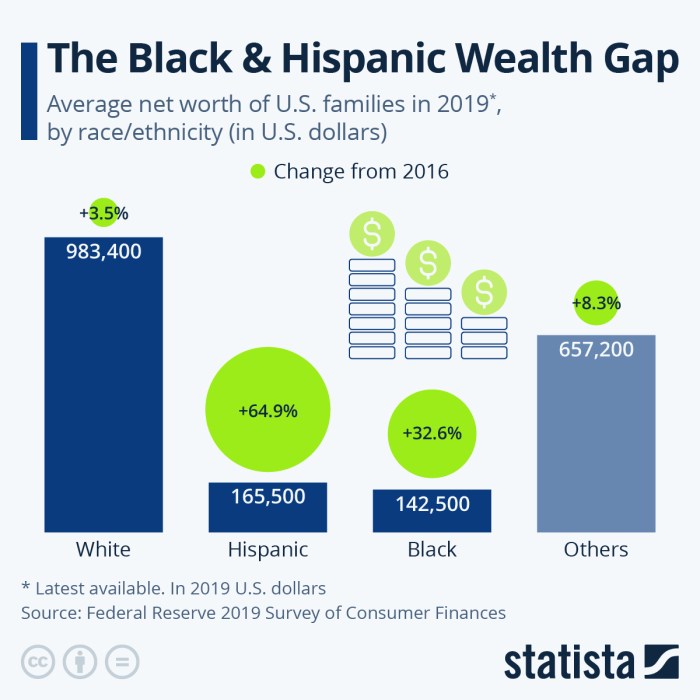
Studies have found that wealth is concentrated among top 1-3% of white households, while the median wealth of black households is around $17,600, compared to $171,000 for white households.
The Earned Income Tax Credit (EITC) and the Child Tax Credit, on the other hand, have been effective in reducing poverty among low-income households. Policymakers should focus on expanding and enhancing such programs to ensure that all eligible households, particularly those with the greatest need, receive the benefits they deserve.
Welfare Programs and Black Net Worth
Welfare programs such as Temporary Assistance for Needy Families (TANF) have a complex relationship with black net worth. While these programs provide essential support to low-income households, they often have restrictive eligibility requirements and limited benefit amounts, which can trap families in poverty and limit their ability to accumulate wealth. For instance, TANF’s work requirements can prevent individuals from receiving benefits if they are unable to find employment, while the program’s time limits can leave families without support during periods of economic downturn.
- TANF has a limited impact on reducing poverty among black and Hispanic women, who face unique challenges in accessing employment and accumulating wealth.
- Expanding Medicaid and other public health programs can help alleviate some of the financial burdens faced by low-income households and create opportunities for wealth accumulation.
Affirmative Action and Education Policy, Black people make 8 median net worth twitter
Affirmative action policies, such as those aimed at increasing access to higher education, have had a positive impact on black net worth by expanding opportunities for wealth accumulation. Research has shown that individuals with a college education have a higher earning potential, which can contribute to greater wealth accumulation over time. Additionally, policies aimed at reducing achievement gaps in K-12 education can help ensure that black students are better prepared for higher education and can take full advantage of these opportunities.
- The American College Testing (ACT) and the Scholastic Aptitude Test (SAT) have reported significant disparities in scores between white and black students, highlighting the need for targeted support to help black students access post-secondary education.
- The Pell Grant program and other forms of student financial aid can help make higher education more accessible to black students and alleviate some of the financial burdens that often accompany college enrollment.
Designing More Effective Programs to Support Black Economic Mobility
To effectively address racial wealth disparities, policymakers must take a comprehensive approach that addresses the unique challenges faced by black households. This includes expanding access to education and job training programs, increasing access to affordable healthcare, and promoting policies that support housing affordability and community development. Additionally, policymakers should prioritize programs aimed at addressing the achievement gap in K-12 education and provide resources to support low-income households in accumulating wealth.
- Community Development Financial Institutions (CDFI) programs have been successful in providing financing to small businesses and entrepreneurs in underserved communities, many of whom are black.
- Policies aimed at reducing income inequality and increasing access to affordable housing, such as rent control and community land trusts, can help address the root causes of black wealth disparities.
The Power of Education and Financial Literacy in Building Wealth

Education and financial literacy are two cornerstone elements that can significantly contribute to achieving economic stability and building wealth among black people. While financial literacy programs have been shown to be effective in closing the wealth gap, education itself can also play a pivotal role in empowering individuals with the knowledge and skills necessary to navigate the complex world of personal finance.
Breaking Down Barriers to Education
Many black individuals face unique challenges in accessing quality education, including lack of access to information, limited financial resources, and inadequate institutional support. Addressing these barriers requires a multifaceted approach that involves governments, educational institutions, community organizations, and individual stakeholders.
- Increasing access to early childhood education programs, such as Head Start and pre-K programs, can equip black children with essential skills and knowledge that will serve them well throughout their academic careers.
- Schools and educational institutions must also prioritize financial education and literacy programs that cater to the specific needs of black students and communities.
- Community organizations and advocacy groups can play a crucial role in promoting financial education and literacy programs that are accessible, culturally relevant, and tailored to the needs of black individuals and families.
Financial Literacy as a Key Driver of Wealth Creation
Financial literacy encompasses a broad range of skills and knowledge, including budgeting, saving, investing, and credit management. While financial literacy is essential for individuals of all backgrounds, it is particularly crucial for black individuals who have historically faced systemic barriers to economic mobility.
- Fintech companies and financial institutions must develop and offer culturally responsive financial products and services that cater to the needs of black individuals and families.
- Personal finance apps, online courses, and community-based programs can provide black individuals with accessible and affordable financial education and literacy resources.
- The National Foundation for Credit Counseling (NFCC) and other reputable organizations offer credit counseling and financial education services that are specifically designed for black individuals and families.
Books and Resources for Building Wealth
A wealth of literature provides valuable insights and practical guidance for building wealth among black individuals and families. Here are some books, publications, and online resources that can be particularly helpful:
-
The Wealthy Barber
by David Chilton
-
Start Your Career, Not Your Life
by Elizabeth Coveney
-
-
Black Enterprise
magazine
-
Essence
magazine
-
Creating a Financial Ecosystem for Black Wealth Creation
Ultimately, building wealth among black individuals and families requires a comprehensive approach that encompasses education, financial literacy, access to credit, and a supportive community network. By working together to create a financial ecosystem that is equitable, inclusive, and culturally responsive, we can help empower black individuals and families to achieve economic stability and build wealth that will sustain them for generations to come.
Empowering Financial Literacy Through Digital Platforms
Digital platforms, such as mobile apps and online courses, can provide black individuals with accessible and affordable financial education and literacy resources.
-
Digit, a mobile banking app that provides financial services to underbanked individuals
-
NerdWallet, a personal finance website that provides financial tools and resources for individuals of all backgrounds
-
Investopedia, a financial education platform that offers courses and resources on personal finance and investing
Community-Based Financial Education and Literacy
Community-based programs can play a vital role in promoting financial education and literacy among black individuals and families.
-
The National Foundation for Credit Counseling (NFCC) offers credit counseling and financial education services specifically designed for black individuals and families
-
The Financial Industry Regulatory Authority (FINRA) provides financial education and literacy resources for individuals of all backgrounds, including those from the black community
-
The Black Economic Alliance promotes financial literacy and education among black individuals and families, with a focus on entrepreneurship and economic empowerment
How Family and Community Networks Contribute to Economic Opportunities
Family and community networks play a vital role in providing support and resources for economic mobility for many individuals, particularly for Black Americans. These networks often serve as a safety net, offering emotional support, financial assistance, and connections to job opportunities. In essence, family and community networks act as a critical component of the Black American’s socio-economic ecosystem, directly impacting their economic opportunities and overall well-being.In fact, research has shown that family and community ties are often stronger among Black Americans than among other racial groups.
This phenomenon is largely due to the historical legacy of systemic racism, which has forced many Black families to rely on one another as a means of survival. As a result, family and community networks have developed strong social capital, with many individuals within these networks providing support and resources to one another.
The Role of Family in Providing Support and Resources
- The role of grandmothers in providing childcare and eldercare is particularly important in many Black American families. Grandmothers often serve as a stabilizing force, providing emotional support and financial assistance to their grandchildren and great-grandchildren.
- Family members often share financial resources, such as paying off debts or contributing to mortgage payments, to help one another achieve economic stability.
- Family networks also facilitate job searching and career advancement by providing connections to job opportunities and offering advice on professional development.
These family-based support systems are essential in helping Black Americans address the financial disparities that they face. By sharing resources and providing emotional support, family members can help one another achieve economic stability and create opportunities for future generations.
The Role of Community Networks in Promoting Economic Development
The community-based initiatives that promote economic development are also crucial in helping Black Americans achieve economic mobility. For instance, community-based programs such as community land trusts (CLTs), cooperative businesses, and community development financial institutions (CDFI) can provide Black Americans with access to affordable housing, small business loans, and other resources necessary for economic growth.
| Type of Community-Based Initiative | Example |
|---|---|
| Community Land Trusts (CLTs) | A CLT is a non-profit organization that helps low-income families purchase affordable housing by leasing the land underneath the home instead of selling the property itself. |
| Cooperative Businesses | A cooperative business is owned and controlled by its members, who share decision-making power and resources. Cooperative businesses can provide Black Americans with alternative forms of economic ownership and wealth creation. |
| Community Development Financial Institutions (CDFI) | A CDFI is a financial institution that provides credit and financial services to communities that are underserved by traditional financial institutions. CDFIs can provide Black Americans with access to affordable loans and other financial resources. |
These community-based initiatives can offer critical support and resources to Black Americans, helping them overcome systemic barriers and achieve economic stability.
Designing a Framework for Scaling Community-Based Initiatives
To ensure that community-based initiatives are replicated and scaled to benefit more individuals, it is essential to design a framework that Artikels the necessary components and resources required to support their growth. This framework should include the following elements:
- A strong and diverse leadership team that is committed to racial equity and social justice.
- A clear and inclusive mission and vision that reflects the needs and aspirations of the target community.
- Strong partnerships with local organizations, businesses, and government agencies that can provide resources and support.
- A robust funding strategy that includes diversified sources of funding and a clear plan for sustaining financial resources over time.
- A comprehensive evaluation plan that includes metrics and benchmarks to measure impact and effectiveness.
By designing a framework that takes into account these essential components, community-based initiatives can be replicated and scaled to benefit more individuals and communities, helping to address the persistent economic disparities faced by Black Americans.
FAQ Guide
What are some strategies for addressing racial wealth disparities?
Comeback initiatives like community land trusts, affordable housing projects, and education-based programs aimed at enhancing financial literacy can help alleviate racial wealth disparities.
How does education impact median net worth?
Research demonstrates a direct correlation between education levels and increased median net worth among black individuals.
What role do family and community networks play in economic opportunities?
Family and community support networks are vital in offering economic assistance, guidance, and encouragement, contributing to the growth of black entrepreneurship and economic mobility.
Can government policies directly address racial wealth disparities?
Policymakers can develop targeted initiatives aimed at improving financial literacy, enhancing education, and promoting economic inclusion, thus aiding in the reduction of racial wealth disparities.
